Paper: ‘Autism and chronic ill health: an observational study of symptoms and diagnoses of central sensitivity syndromes in autistic adults’
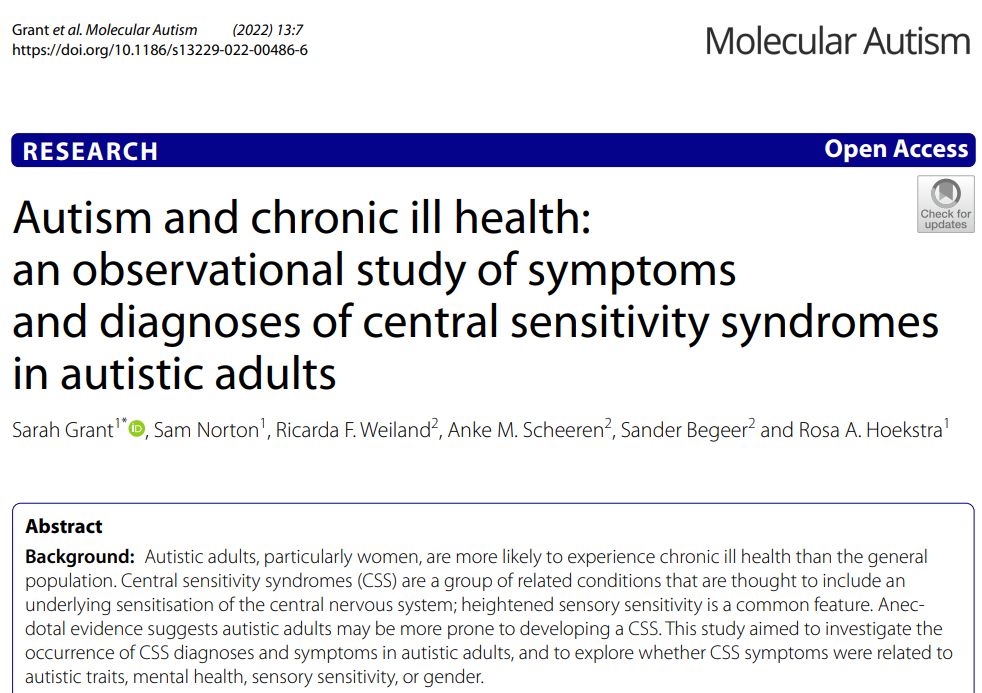
This large observational study explored why autistic adults experience high rates of chronic fatigue, chronic pain, and related conditions, often referred to as central sensitivity syndromes.
Central sensitivity syndromes include conditions such as ME/CFS, fibromyalgia, IBS, migraine, and chronic pain. These conditions are thought to involve heightened sensitivity within the central nervous system, rather than damage to a single organ or tissue.
The researchers wanted to understand how common these symptoms and diagnoses are in autistic adults, and which factors are most strongly linked to them.
What the researchers found
21% of autistic adults reported a formal diagnosis of at least one central sensitivity syndrome.
60% scored above the clinical threshold for central sensitisation symptoms, even if they had never received a diagnosis.
Autistic women were significantly more likely than men to experience both diagnoses and symptoms.
The strongest predictors of chronic fatigue and pain symptoms were:
Sensory sensitivity
Anxiety
Gender and age
Crucially, autistic traits themselves did not directly predict chronic illness symptoms once sensory sensitivity and anxiety were taken into account.
What this suggests
This study supports the idea that chronic fatigue and pain in autistic adults are strongly linked to nervous system sensitivity and regulation, rather than being unexplained, psychological, or unrelated to the body.
It suggests that:
Many autistic adults experience physical symptoms consistent with central sensitisation, even without a formal diagnosis.
Sensory overload and chronic nervous system activation may increase vulnerability to long-term illness.
Anxiety and sensory sensitivity appear to mediate the relationship between autism and chronic illness, meaning they help explain why symptoms develop.
Why this matters for neurodivergent people
For many autistic adults, fatigue, pain, and physical collapse are:
Dismissed as anxiety or burnout
Attributed solely to mental health
Missed or misdiagnosed entirely
This research provides evidence that:
These symptoms are common, measurable, and biologically real
They deserve proper recognition and appropriate support
Diagnostic overshadowing is a real risk, especially for autistic women
It also helps explain why approaches that focus on nervous system regulation, sensory safety, and reducing chronic stress may be particularly relevant for neurodivergent people experiencing chronic illness.
What this does not claim
This study does not claim that autism causes chronic illness, nor that all autistic people will develop these conditions. It identifies patterns and associations, not inevitability.
It also does not reduce symptoms to psychology alone. Instead, it highlights the interaction between sensory processing, anxiety, and physical health.
Key takeaway
Chronic fatigue and pain are highly prevalent in autistic adults, and appear closely linked to nervous system sensitisation. Increased awareness of this connection is essential for better diagnosis, treatment, and recovery support.