Unexplained symptoms are worth exploring, but it's important to first speak to your GP and have potential medical causes appropriately investigated. This library is for information only and does not replace medical advice, diagnosis or testing.
-
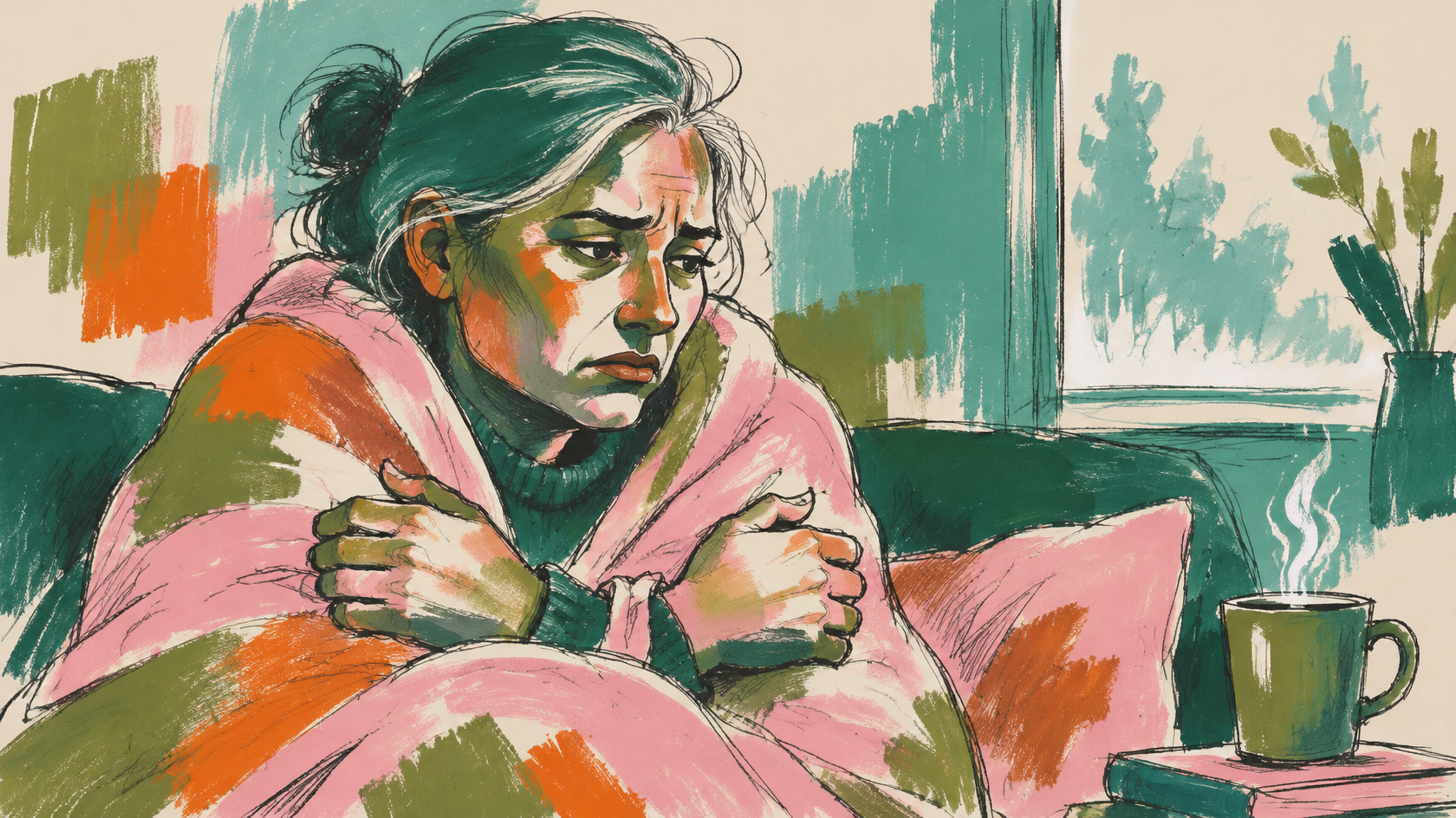
Chills describe a sensation of feeling cold, often accompanied by shivering, goosebumps or a sudden feeling of coldness moving through the body.
Temperature dysregulation describes difficulties maintaining or experiencing a comfortable body temperature. Someone may feel unusually cold, excessively hot or experience sudden changes between the two.
These symptoms can occur together or independently.
For some people, chills are associated with a fever or infection. For others, they occur without an elevated body temperature or an obvious environmental cause.
Experiences may include:
Feeling intensely cold in a warm room.
Sudden waves of chills or shivering.
Cold hands and feet despite the rest of the body feeling warm.
Feeling overheated or experiencing unexpected sweating.
Alternating between feeling too hot and too cold.
Feeling feverish despite a normal thermometer reading.
Chills and temperature regulation difficulties can occur alongside conditions such as ME/CFS, Long COVID, dysautonomia, thyroid disorders, infections and other illnesses.
For some people, these sensations are occasional. For others, they can be persistent, unpredictable or particularly noticeable during periods of increased symptoms.
-
The body continuously regulates its internal temperature through interactions between the brain, nervous system, blood vessels, sweat glands and muscles.
These processes help maintain a relatively stable core temperature despite changes in the surrounding environment.
The Brain's Temperature Control System
An area of the brain called the hypothalamus plays a central role in regulating body temperature.
It receives information about temperature from the body and coordinates responses to help maintain an appropriate internal temperature.
When the body needs to conserve heat, it can narrow blood vessels near the skin's surface and produce shivering.
When the body needs to release heat, it can increase blood flow to the skin and activate sweating.
These responses usually happen automatically, without conscious effort.
Why Chills Happen
Chills often occur when the body is trying to increase or conserve heat.
Shivering involves rapid, involuntary muscle contractions that generate warmth.
During a fever, the hypothalamus can temporarily raise the body's temperature set point as part of the immune response.
This can cause someone to feel intensely cold and shiver even while their body temperature is rising.
However, chills can also occur without a fever.
Changes in circulation, hormonal activity, autonomic nervous system responses and other physiological processes can contribute to sensations of coldness.
The Autonomic Nervous System
The autonomic nervous system regulates many involuntary bodily functions, including sweating, blood vessel constriction and aspects of temperature control.
It helps the body respond automatically to changes in temperature, physical activity and internal conditions.
When autonomic regulation is disrupted, as can occur in some forms of dysautonomia, people may experience unusual sweating patterns, heat intolerance, cold extremities or difficulty adjusting to changes in environmental temperature.
These symptoms are reported by some people with Long COVID, ME/CFS and conditions involving autonomic dysfunction.
Not everyone who experiences temperature fluctuations has an autonomic disorder, however.
Circulation and Cold Extremities
The body adjusts blood flow to different areas to help conserve or release heat.
When blood vessels near the skin narrow, less warm blood reaches the hands, feet and other peripheral areas.
This can make the extremities feel noticeably colder than the rest of the body.
Some people experience cold hands or feet even when the surrounding temperature is comfortable.
In certain conditions, such as Raynaud's phenomenon, blood vessel spasms can also cause fingers or toes to change colour and become cold, numb or painful.
Feeling Feverish Without a Fever
Some people experience sensations resembling a fever, including chills, warmth, sweating or general malaise, while their measured body temperature remains within the normal range.
The sensation of temperature is not determined solely by core body temperature.
Information from temperature-sensitive nerves in the skin, circulation and the brain's processing of bodily signals also contributes to whether someone feels hot or cold.
As a result, subjective temperature sensations and thermometer readings do not always match.
This does not mean the sensations are imagined. It means the experience of temperature involves several interacting processes.
-
Chills don't always mean you have a fever.
Shivering and sensations of coldness can occur even when body temperature is normal.
Feeling feverish and having a measured fever are different.
Someone may experience warmth, chills or sweating without an elevated thermometer reading.
Temperature sensitivity can involve both heat and cold.
Some people experience intolerance to warm environments, while others struggle with cold temperatures or fluctuate between the two.
Cold hands and feet don't always mean the whole body is cold.
Changes in peripheral circulation can make particular areas feel cold while core body temperature remains stable.
Sweating patterns can change.
Some people experience excessive sweating, reduced sweating or sweating that seems unrelated to environmental temperature.
Temperature changes can overlap with other symptoms.
Chills and temperature discomfort may occur alongside fatigue, dizziness, nausea, palpitations or flu-like sensations.
Symptoms can be difficult to predict.
Someone may feel cold in a warm environment, suddenly become overheated or experience rapid changes in temperature sensation.
Temperature dysregulation is a description, not a diagnosis.
It refers to difficulties with temperature control or temperature sensations, which can have several different underlying causes.
-
Chills and temperature-related symptoms can feel surprisingly intense, even when they are not visible to others.
The sudden chill: Experiencing a wave of coldness moving through the body without an obvious change in the surrounding temperature.
The freezing extremities: Having hands or feet that feel icy cold while the rest of the body feels relatively comfortable.
The internal shiver: Feeling as though the body is trembling or shivering internally, sometimes without visible shaking.
The feverish feeling: Experiencing chills, warmth or a sense of being unwell despite a normal thermometer reading.
The unexpected overheating: Suddenly feeling excessively hot in an environment that previously felt comfortable.
The temperature swings: Alternating between feeling cold and overheated, sometimes within a short period.
The unusual sweating: Experiencing sweating that seems excessive, insufficient or disconnected from physical activity and room temperature.
The difficulty adjusting: Finding that moving between warm and cool environments produces unusually strong or prolonged discomfort.
For some people, temperature-related symptoms are mild and occasional. For others, they can interfere with sleep, concentration, physical comfort and everyday activities.
The sensations may occur independently or alongside other symptoms, making it difficult to identify a consistent pattern.
One particularly confusing experience is feeling intensely cold or feverish while a thermometer indicates a normal temperature.
Although the sensations are real, they do not always reflect a measurable change in core body temperature.
-
Chills and temperature changes can occur for many reasons, including infections, medication effects, hormonal changes, circulatory conditions and disorders affecting the autonomic nervous system.
New, persistent, worsening or unexplained temperature-related symptoms may warrant medical assessment, particularly when accompanied by other changes in health.
Repeated episodes of fever, unexplained night sweats, significant weight loss or marked changes in sweating or temperature tolerance should be discussed with a healthcare professional.
Severe chills accompanied by confusion, breathing difficulties, a non-fading rash or signs of serious illness can require emergency medical attention.