Unexplained symptoms are worth exploring, but it's important to first speak to your GP and have potential medical causes appropriately investigated. This library is for information only and does not replace medical advice, diagnosis or testing.
-
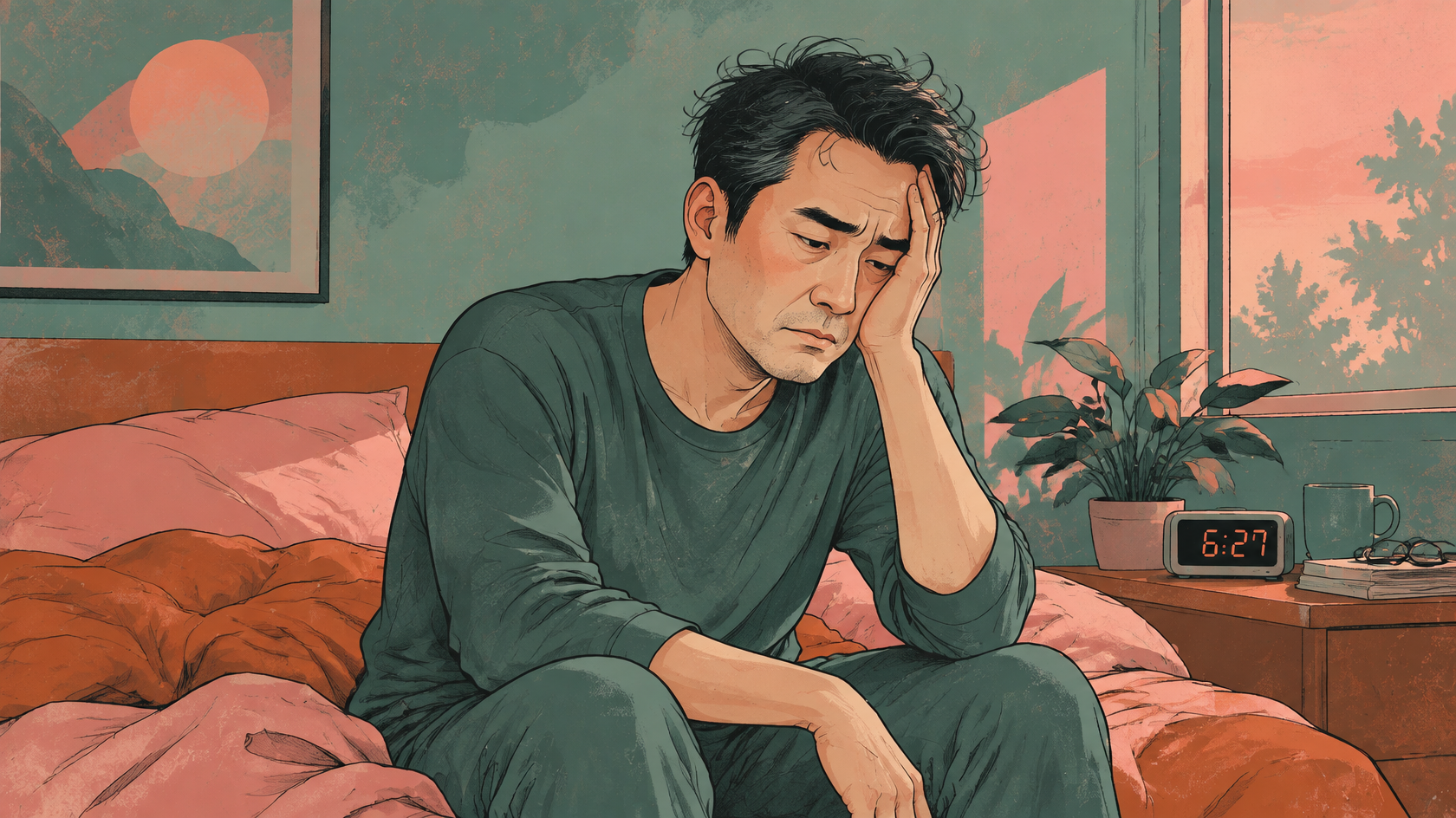
Non-restorative sleep, also called unrefreshing sleep, describes sleep that does not leave someone feeling rested or refreshed.
A person may sleep for seven, eight or even ten hours and still wake feeling exhausted, sluggish or physically unwell.
Unlike insomnia, where the main difficulty involves falling asleep or staying asleep, non-restorative sleep can occur even when someone appears to sleep through the night.
Some people describe waking up feeling as though they haven't slept at all. Others experience a heavy, groggy sensation that takes hours to ease, or find that their energy and alertness never fully recover.
Non-restorative sleep is reported in conditions including ME/CFS, fibromyalgia, Long COVID, chronic pain conditions, sleep disorders and other chronic illnesses.
It may occur alongside fatigue, cognitive dysfunction, pain, headaches and difficulties with concentration.
For some people, it is an occasional experience. For others, waking unrefreshed becomes a persistent feature of everyday life.
-
Sleep is an active biological process involving the brain, nervous system, hormones and multiple systems throughout the body.
During sleep, the brain moves through different stages that support memory, learning, physiological regulation and other essential functions.
However, the amount of time someone spends asleep does not necessarily reflect how restorative that sleep feels.
Sleep Stages and Sleep Quality
Sleep is broadly divided into two types: non-rapid eye movement (NREM) sleep and rapid eye movement (REM) sleep.
NREM sleep includes lighter stages and deeper slow-wave sleep, while REM sleep is associated with vivid dreaming and important aspects of memory and emotional processing.
Throughout the night, the brain cycles between these stages.
Sleep quality depends on several factors, including sleep continuity, timing, breathing, and the organisation of these sleep stages.
Someone may spend an apparently adequate number of hours asleep but still experience disrupted or poor-quality sleep.
Sleep Fragmentation
Sleep fragmentation occurs when sleep is repeatedly interrupted by brief awakenings or changes in sleep depth.
These interruptions are not always remembered.
A person may therefore believe they have slept continuously, even when their sleep has been disrupted throughout the night.
Sleep fragmentation can be associated with breathing disturbances, pain, movement disorders and other conditions.
Repeated interruptions may affect how refreshed someone feels upon waking, even when their total sleep duration appears normal.
Sleep and the Nervous System
Sleep and wakefulness are regulated by interacting systems in the brain, including those involved in circadian rhythms, sleep pressure and alertness.
The autonomic nervous system also changes its activity during different stages of sleep, influencing heart rate, breathing and other bodily functions.
In some chronic illnesses, differences in autonomic regulation, pain processing or physiological arousal may coexist with disrupted sleep.
However, non-restorative sleep has many possible causes, and it cannot automatically be attributed to nervous system dysregulation.
Sleep Inertia and Morning Grogginess
Sleep inertia describes the temporary period of reduced alertness and cognitive performance that can occur immediately after waking.
During this period, someone may feel confused, sluggish, disorientated or mentally slow.
Sleep inertia is a normal phenomenon, but its intensity and duration vary.
For some people, particularly those experiencing sleep disorders or significant fatigue, morning grogginess can be unusually pronounced or prolonged.
Non-restorative sleep is broader than sleep inertia, however. Someone may continue to feel exhausted long after they are fully awake.
Non-Restorative Sleep in Chronic Illness
Unrefreshing sleep is a recognised feature of several chronic conditions, including ME/CFS and fibromyalgia.
In these conditions, people may report profound exhaustion upon waking despite spending sufficient time asleep.
Sleep studies do not always identify abnormalities that fully explain the severity of the experience.
This can be particularly frustrating when someone appears to be sleeping adequately but experiences little sense of recovery.
The mechanisms contributing to unrefreshing sleep may differ between individuals and conditions, and the symptom can involve overlapping sleep, neurological and physiological factors.
Cortisol and Sleep Quality
Cortisol is a hormone involved in regulating alertness, energy and the body's response to stress.
It follows a natural daily rhythm, typically reaching lower levels during the early part of the night before gradually rising towards morning to help prepare the body for waking.
This rhythm is regulated by the hypothalamic–pituitary–adrenal (HPA) axis, a communication system between the brain and adrenal glands.
Stress and changes in HPA axis activity can influence cortisol patterns, which may affect sleep continuity and the balance between sleep and wakefulness.
Research has identified altered cortisol rhythms in some people with chronic sleep disturbances, although findings vary between conditions and individuals.
Importantly, sleep duration and sleep quality are not the same thing. Someone may spend many hours asleep but still experience fragmented sleep, disrupted sleep architecture or other processes that contribute to waking unrefreshed.
Cortisol may be one factor influencing these processes, but there is no established single cortisol pattern that explains non-restorative sleep. Other mechanisms, including sleep disorders, pain, autonomic dysfunction and changes in sleep regulation, may also contribute.
-
Sleeping longer doesn't always mean feeling more rested.
Someone may sleep for an extended period and still wake feeling profoundly exhausted.
Non-restorative sleep and insomnia are different.
Insomnia involves difficulty falling asleep, staying asleep or waking earlier than intended. Non-restorative sleep describes waking without feeling refreshed. The two can occur together.
You can experience disrupted sleep without remembering waking up.
Brief awakenings and changes in sleep depth may occur without conscious awareness.
Unrefreshing sleep isn't the same as daytime sleepiness.
Someone may feel exhausted throughout the day without feeling particularly sleepy or able to fall asleep.
Sleep quality involves more than the number of hours slept.
Sleep continuity, breathing, timing and sleep-stage patterns can all influence the experience of sleep.
Waking exhausted can involve physical and cognitive symptoms.
Some people experience body heaviness, headaches, muscle aches, brain fog or a general feeling of being unwell upon waking.
Non-restorative sleep can occur alongside sleep disorders.
Conditions such as obstructive sleep apnoea, restless legs syndrome and other sleep disturbances may contribute to waking unrefreshed.
Unrefreshing sleep is not always explained by a sleep study.
Some people report significant non-restorative sleep even when standard investigations do not identify a clear abnormality.
-
Non-restorative sleep can be difficult to explain because it contradicts the expectation that sleeping should leave the body feeling recovered.
The no-sleep feeling: Waking after a full night feeling as though no sleep has taken place.
The heavy morning: Experiencing intense bodily heaviness, sluggishness or exhaustion immediately upon waking.
The prolonged grogginess: Finding that it takes hours to feel mentally alert or physically awake.
The morning brain fog: Struggling to concentrate, think clearly or process information after waking.
The unwell awakening: Waking with body aches, headaches or a general feeling of physical malaise.
The long sleep without relief: Sleeping for significantly longer than usual but experiencing little improvement in exhaustion.
The inconsistent mornings: Occasionally waking refreshed but more often feeling exhausted, without an obvious explanation for the difference.
The exhaustion without sleepiness: Feeling completely drained while not necessarily wanting or being able to fall asleep again.
For some people, the most difficult part of non-restorative sleep is the feeling that their body has not recovered overnight.
Activities that might ordinarily feel manageable in the morning can require considerable effort from the moment they wake.
Others find that their alertness improves gradually throughout the day, while some experience persistent exhaustion regardless of how long they have been awake.
The experience can also fluctuate. Someone may have occasional refreshing nights of sleep alongside periods when every morning begins with significant fatigue.
-
Non-restorative sleep can be associated with sleep disorders, chronic health conditions, medication effects, pain, mood disorders and other factors.
Persistent or worsening unrefreshing sleep may warrant medical assessment, particularly when it significantly affects daytime functioning.
Symptoms such as loud snoring, witnessed pauses in breathing during sleep, waking gasping or choking, or excessive daytime sleepiness may indicate an underlying sleep disorder requiring investigation.
Severe daytime sleepiness that creates a risk of falling asleep while driving or undertaking other safety-critical activities also requires prompt medical attention.