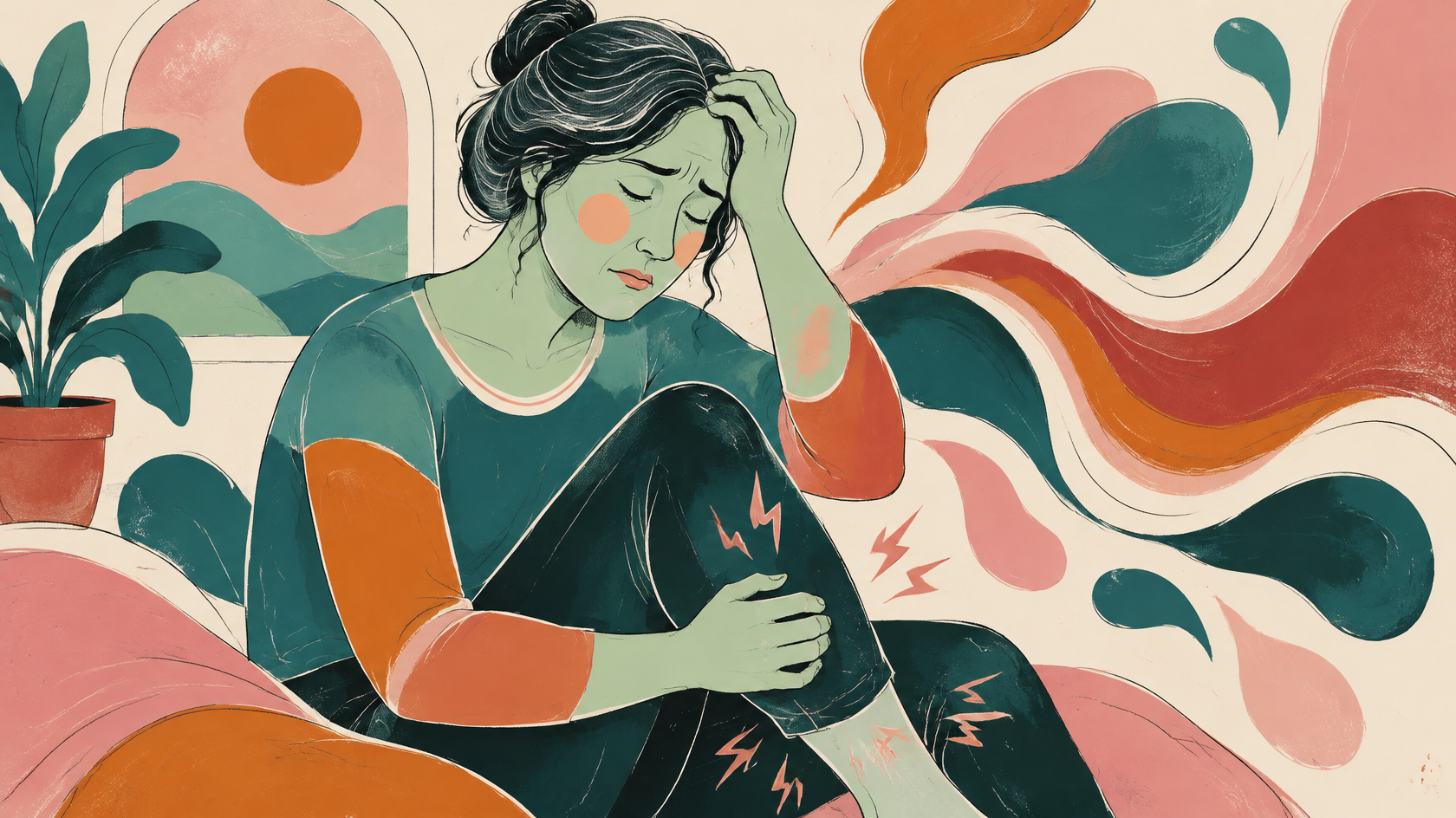
Unexplained symptoms are worth exploring, but it's important to first speak to your GP and have potential medical causes appropriately investigated. This library is for information only and does not replace medical advice, diagnosis or testing.
-
Paresthesia describes unusual sensations on or beneath the skin, including tingling, prickling, buzzing, crawling or the familiar feeling of pins and needles.
These sensations can occur anywhere in the body but are particularly common in the hands, feet, arms, legs and face.
Most people have experienced temporary pins and needles after sitting awkwardly or putting pressure on a nerve. The sensation usually disappears once the pressure is relieved.
However, some people experience tingling and other unusual sensations repeatedly, persistently or without an obvious physical explanation.
These sensations may include:
Pins and needles or prickling.
Buzzing, fizzing or vibrating sensations.
A feeling of insects crawling across the skin.
Mild electric shock-like sensations.
Tingling that moves between different areas.
A sensation of numbness or reduced feeling.
Unusual sensations despite nothing touching the skin.
Paresthesia can occur alongside conditions affecting peripheral nerves, the brain or spinal cord, as well as migraine, nutritional deficiencies, metabolic conditions and some chronic illnesses.
Unusual sensory symptoms are also reported by some people with fibromyalgia, ME/CFS and Long COVID.
For some people, these sensations are mild and occasional. For others, they can be persistent, distracting or particularly difficult to understand.
-
The nervous system continuously receives information about touch, pressure, temperature, movement and other sensations.
Specialised sensory receptors detect changes in the body and surrounding environment, sending electrical signals through nerves to the spinal cord and brain.
Paresthesia occurs when activity within these sensory pathways produces unusual sensations, sometimes without a corresponding external stimulus.
Sensory Nerves and Skin Sensations
The skin contains different types of sensory nerve endings that respond to touch, pressure, temperature and potentially harmful stimuli.
These nerves send signals to the central nervous system, where the information is processed into conscious sensations.
Ordinarily, this allows us to recognise when something touches the skin, when an object feels warm or when pressure is applied.
However, changes in nerve signalling can produce sensations that do not correspond to something happening on the skin.
For example, someone may experience prickling or buzzing despite nothing touching the affected area.
Why Pins and Needles Happen
The familiar sensation of pins and needles often occurs when pressure temporarily affects a peripheral nerve.
For example, sitting with crossed legs may compress a nerve and interfere with normal signalling.
When the pressure is relieved, nerve activity changes as normal function returns, sometimes producing a brief period of tingling or prickling.
However, paresthesia can also occur without temporary nerve compression.
Changes affecting nerve function, circulation, metabolism or sensory processing may contribute to recurring or persistent symptoms.
Peripheral Nerves and Neuropathy
Peripheral nerves carry information between the brain, spinal cord and the rest of the body.
When these nerves are damaged or affected by disease, a condition known as peripheral neuropathy can develop.
Neuropathy may cause tingling, burning, numbness, altered temperature sensation or electric shock-like discomfort.
Symptoms often begin in the feet or hands, although patterns vary depending on which nerves are affected.
Not everyone who experiences paresthesia has neuropathy. Tingling is a symptom rather than a diagnosis.
The Brain and Sensory Processing
Sensations are not simply recorded by the brain. They are constructed through the processing and interpretation of electrical signals arriving from the body.
Different areas of the brain help identify where a sensation is occurring, how intense it feels and what kind of sensation it represents.
Changes in sensory processing can influence how bodily signals are experienced.
In some conditions, ordinary sensory information may become unusually noticeable or uncomfortable.
However, tingling alone does not establish that the nervous system has become sensitised, and unusual sensations can have many different causes.
Why Sensations Can Move Around
One of the more confusing aspects of paresthesia is that sensations do not always remain in one location.
Someone may experience tingling in a hand, followed by buzzing in a foot or prickling across the face.
In some conditions, the distribution of symptoms follows particular nerves or areas of the nervous system.
In others, sensations may be more widespread, intermittent or difficult to map to a single location.
The pattern of tingling can provide useful information about its possible cause, but a changing location does not automatically indicate a particular condition.
Stress, Breathing and Sensory Changes
Stress and physiological arousal can sometimes influence sensory experiences.
For example, rapid or deep breathing associated with anxiety or hyperventilation can change carbon dioxide levels in the blood.
This may produce tingling around the mouth, fingers or hands, sometimes alongside dizziness or lightheadedness.
Heightened attention to bodily sensations may also make existing tingling more noticeable.
However, paresthesia should not automatically be attributed to anxiety or stress, particularly when symptoms are new, persistent or unexplained.
-
Pins and needles can occur without anything touching the skin.
Sensory nerve activity can produce tingling, prickling or buzzing without an external stimulus.
Tingling and numbness are different.
Tingling involves an unusual sensation, while numbness describes reduced or absent feeling. They can occur together.
Paresthesia isn't always painful.
Some people find tingling mildly strange or distracting, while others experience burning, sharp or uncomfortable sensations.
Sensations can move around.
Tingling may affect different areas at different times, although some conditions produce more consistent patterns.
Buzzing and vibrating sensations are also forms of altered sensation.
Some people describe internal fizzing, humming or vibration rather than traditional pins and needles.
Tingling doesn't automatically mean nerve damage.
Temporary pressure, changes in breathing and several other processes can produce paresthesia without permanent nerve injury.
The pattern can vary considerably.
Sensations may be continuous, intermittent, localised or widespread.
Paresthesia and muscle weakness aren't the same thing.
Tingling involves sensory pathways, while muscle weakness involves the ability to generate muscular force. Both may occur together in some conditions.
-
Paresthesia can be particularly difficult to describe because many of the sensations have no obvious equivalent in everyday experience.
The classic pins and needles: Feeling repeated tiny prickles, as though a limb is waking up after being asleep.
The buzzing skin: Experiencing a humming, fizzing or vibrating sensation beneath the skin.
The crawling feeling: Feeling as though something is moving across the skin despite nothing being there.
The electric flicker: Experiencing brief, shock-like sensations that appear and disappear suddenly.
The tingling face: Noticing prickling or unusual sensations around the cheeks, lips or other areas of the face.
The numb patches: Experiencing areas that feel less sensitive to touch, sometimes alongside tingling.
The shifting sensations: Feeling tingling in one area that later disappears and emerges somewhere completely different.
The intermittent prickling: Experiencing short episodes of tingling separated by periods of entirely normal sensation.
The internal vibration: Feeling as though part of the body is vibrating or trembling despite no visible movement.
For some people, paresthesia follows a recognisable pattern, affecting the same area repeatedly.
For others, the location, intensity and type of sensation can change considerably.
One episode might feel like tiny electric shocks, while another resembles buzzing, crawling or a patch of skin that has partially fallen asleep.
This variability can make the symptom particularly confusing, especially when the sensations appear without an obvious trigger or visible change to the skin.
Some people experience paresthesia alongside pain, dizziness, fatigue or muscle weakness, while others notice it as an isolated symptom.
-
Tingling and altered sensations can occur for many reasons, including temporary nerve compression, vitamin deficiencies, medication effects, metabolic conditions and disorders affecting the nervous system.
New, persistent, progressive or unexplained tingling may warrant medical assessment, particularly when accompanied by numbness, weakness or changes in coordination.
Sudden numbness or tingling accompanied by weakness on one side of the body, facial drooping, speech difficulties or other sudden neurological changes can indicate a medical emergency.